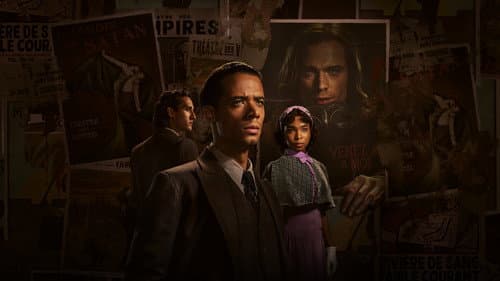
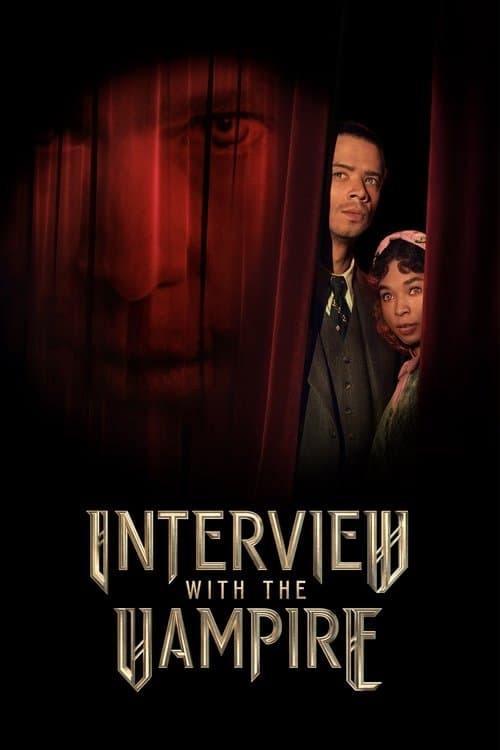
Interview with the Vampire
“Who wants to live forever?”
AI Woke Score
The activism is the point.
confidence: high
Audience Score
Be the first to vote.
Where to watch
The Verdict
This adaptation takes the long-implied queer subtext of Anne Rice's novel and makes it the explicit, central romance, while also race-swapping Louis and Claudia and rebuilding the story around Jim Crow-era racial dynamics. It's a bold, well-crafted reimagining, but it leans heavily into identity-forward themes that diverge sharply from the source. (spoiler) Louis and Lestat's relationship is portrayed as a full domestic gay partnership.
What the AI Flagged
Each axis scored 0–100, with the receipts. The headline score weights the worst offense, so a single egregious element isn't diluted by the rest.
Identity Swaps
70The protagonist Louis is race-swapped from a white plantation owner in the novel to a Black businessman/pimp in 1910s New Orleans, and Claudia is also reimagined as Black.
- Louis de Pointe du Lac reconceived as a Black Creole man operating in Storyville
- Claudia recast as a Black teenager rather than the novel's white child
Girlboss & Male Demotion
20Female characters like Claudia are given strong arcs but the narrative centers male leads and doesn't systematically diminish men.
- Claudia's assertive rebellion against Lestat
LGBTQ+ / Trans / Non-Binary Content
98The central relationship between Louis and Lestat is made an explicit, fully realized romantic and sexual gay relationship, the spine of the entire series.
- Louis and Lestat's openly romantic/sexual partnership
- On-screen same-sex intimacy and a domestic vampire 'marriage'
- Their relationship framed as the emotional core of the show
DEI Casting
55Diverse casting reframes the period setting around race, with the show explicitly building Jim Crow-era racial dynamics into the story.
- Black lead navigating segregated New Orleans society
- Race-conscious reworking of the period milieu
Preachiness
45The series foregrounds racism and racial oppression as recurring themes alongside the gothic drama, occasionally didactic.
- Storylines centered on Louis facing racial discrimination in Storyville
- Racial subtext woven into vampire power dynamics
Anti-Masculinity / Anti-West
35Explores racism and colonial-era racial hierarchy critically, and depicts toxic dynamics in Lestat's controlling behavior, but not a sustained anti-West thesis.
- Depiction of white-dominated 1910s social order as oppressive
- Lestat's abusive controlling masculinity
Source Betrayal
75Significantly reworks Anne Rice's novel—changing Louis's race, era, and making the homoerotic subtext fully explicit—though it preserves core characters and gothic tone.
- Setting moved to early 20th-century Storyville
- Subtext of the books made explicitly canonical romance
- Reinvented racial and social backgrounds for the leads
Trailer & Photos
Audience Reviews
Discussion
Cast & Crew

Jacob Anderson
Louis de Pointe du Lac

Sam Reid
Lestat de Lioncourt

Assad Zaman
Armand

Delainey Hayles
Claudia de Lioncourt de Pointe du Lac

Ben Daniels
Santiago

Eric Bogosian
Daniel Molloy
Michelle Ashford (Executive Producer) · Esta Spalding (Executive Producer) · Mark Taylor (Executive Producer) · Christopher Rice (Executive Producer)